As hopefully all DRC members are aware, Pub run season is upon us. Every Wednesday at 6PM the Club meets at a different bar or brewery, runs 4-to-5 miles, and then enjoys a beverage or two together. Despite a significant decline in alcohol consumption overall by DRC in the last few years, attendance of our pub runs has grown exponentially over that same timeframe. I remember a Pub Run a few years ago that was attended only by myself, the First Lady, and fellow DRC board member and Pub Run Organizer, Matt Griffis. Conversely, all of the pub runs we’ve had this year have been attended by approximately 40 people, with our annual Christmas Run attracting maybe 75 or more (too many to count).
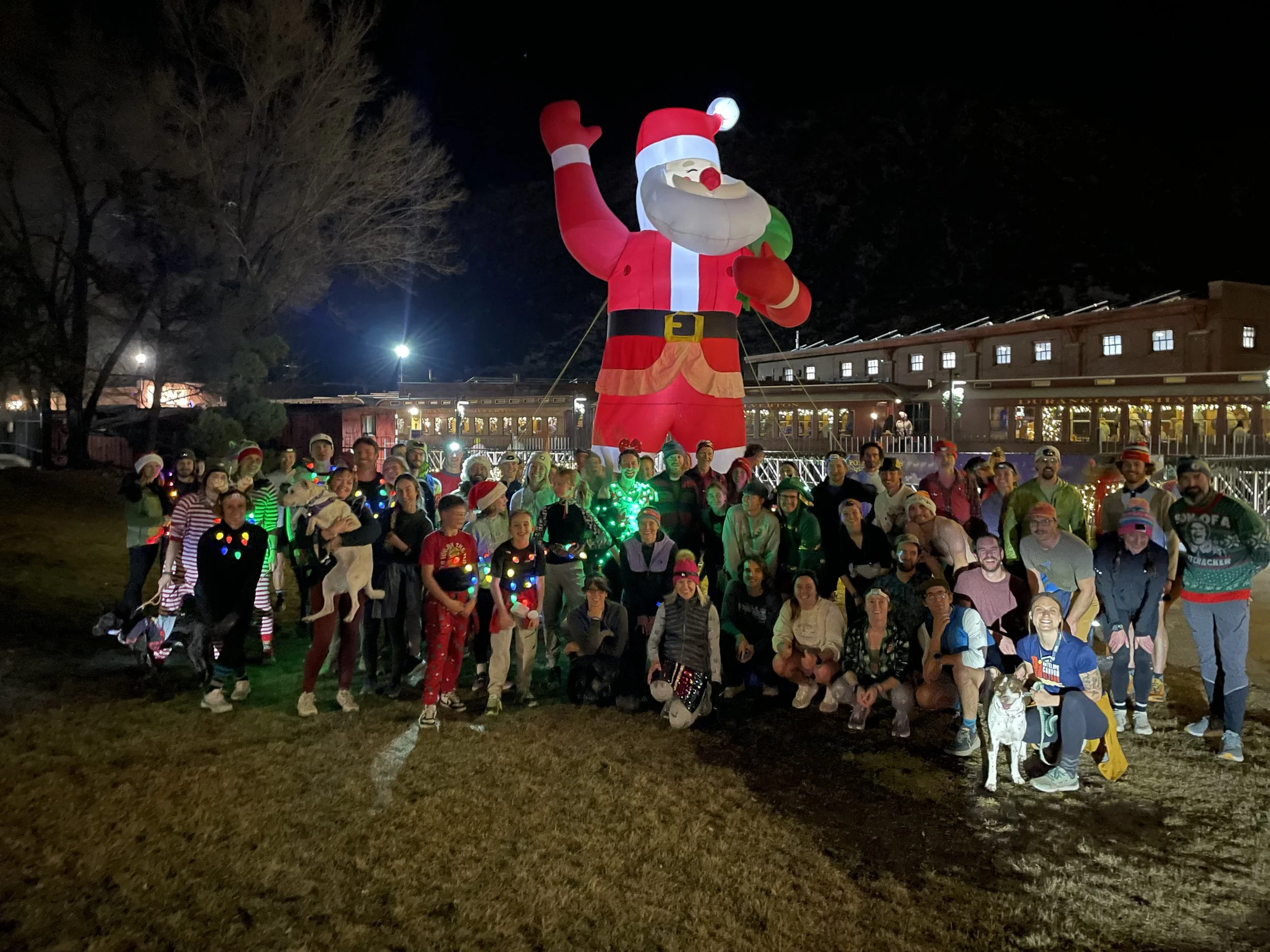
Best attended DRC Christmas Run ever this year.
I believe the rise in popularity is because the Pub Runs are the most accessible runs that we do. While I prefer running trails, Durango’s trails are steep and sometimes technical. Our Wednesday Night Trail Runs are typically 6-8 miles with around 1,000 feet climbing or more. In other words, potentially challenging for a casual runner. However, anyone that can continuously run at a 10:00 minute pace for 4-5 miles on a flat paved surface can keep up with the Pub Runs, and word has gotten out how fun these are.
Why Inclusion Matters
Since joining the DRC board in 2020, making this Club more inclusive to runners of all abilities has been my main goal. And if you haven’t attended a DRC run in a few years, we’ve made several changes to achieve that goal. The weekend long runs were originally conceived as a way for our members to join us that have work/life conflicts on weekdays. The Wednesday Night Trail Runs now include an easy pace group that starts 15 minutes before the main group, which typically allows everyone to finish together, which in turn allows everyone to enjoy their post-run beverages together. The above-described Pub Runs now happen every week instead of every other week, and our Thursday Morning runs now run at a similar pace to the Pub Runs (the target pace was previously 9:00 minute miles). As a result of these efforts, the Club has grown to over 425 members. Having this many members is the only way we can keep our dues so ridiculously cheap (currently $25/person/year) while offering our members more than we ever have. Also, pretty much every fast runner in Durango is already a member of the Club. The only way we can continue to grow our membership and do even more awesome things is to recruit more casual runners.
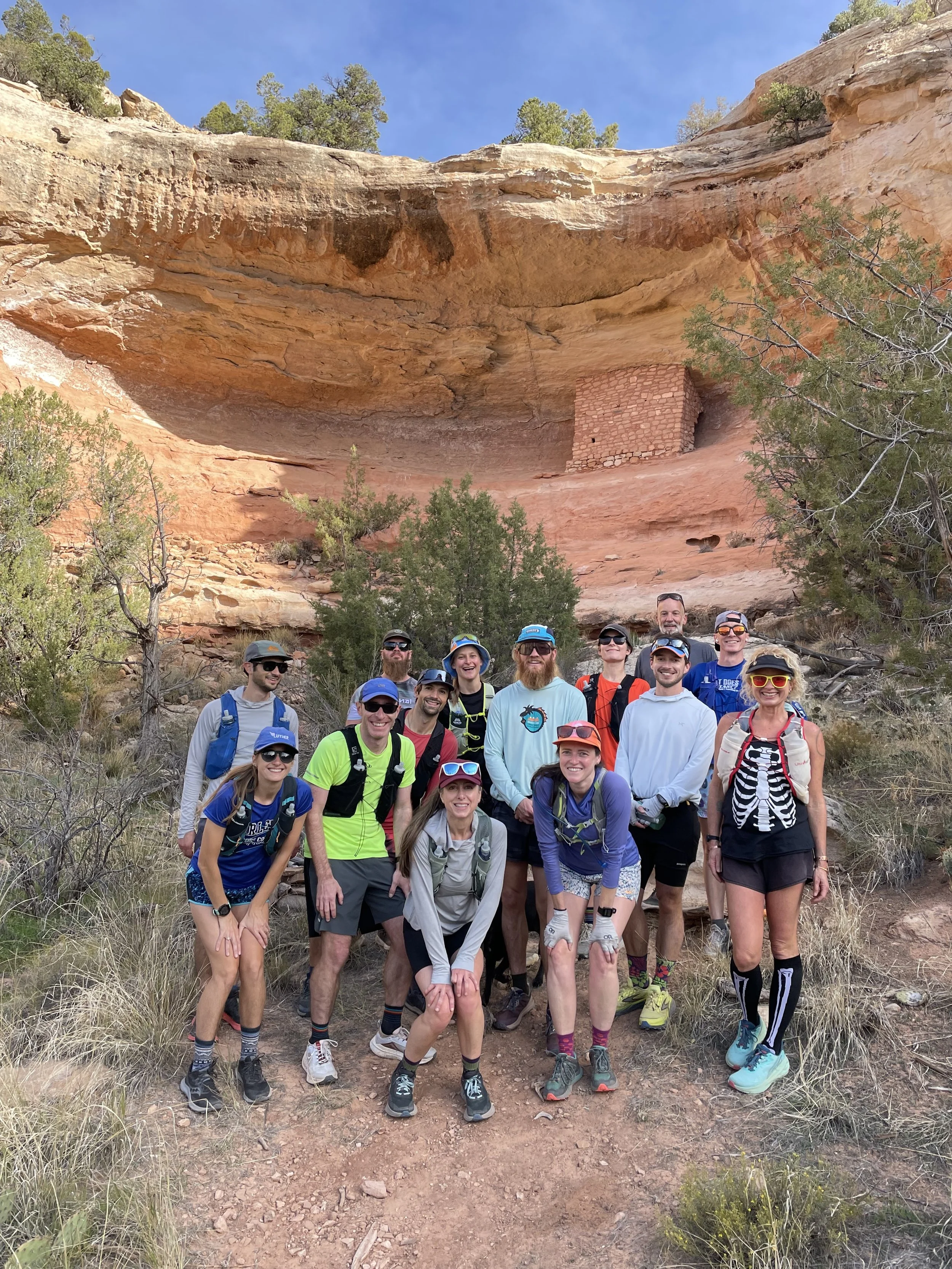
Last DRC Weekend Long Run of 2025, at Sand Canyon, which was followed by DRC-provided tamales from Esmerelda’s in Cortez.
Your Job Too
Efforts to make sure the Club is inclusive of runners of all abilities is the responsibility of all of our members, not just the volunteers on the DRC Board. At the next Pub Run you can choose to talk to someone you notice is new to the Club to make sure they feel welcome. You can also choose to maybe run a little slower than you otherwise would for the sake of good conversation. If you feel really inspired, you could choose to sign up to be the sweeper at one of our runs to make sure no one gets dropped. It’s the people that try joining a run and get dropped that don’t come back. Pretty much everyone else has a great time and comes back for more.
Supporting DRC races, either by registering to race or through volunteering is another great way to support inclusiveness within our running community. As a race director, the most exciting part is when the first runners come through with times that amaze me, but the most rewarding part is watching the last runners come through. These are the people that truly pushed themselves to their physical limits that day and deserve to be celebrated. For a lot of DRC members finishing one of our races (the longest of which is 15 miles) is no big deal, but for at least a few participants every year, it is truly a bucket list item to finish a half marathon or longer race. I personally got back into running a little over eight years ago to train for the 5-mile DRC Turkey Trot. Then the 10-mile Narrow Gauge. Then the Thirsty 13. Then the Kennebec Mountain Run. My journey into running is not unique. These relatively accessible events are the gateway for a lot of folks into the running community.
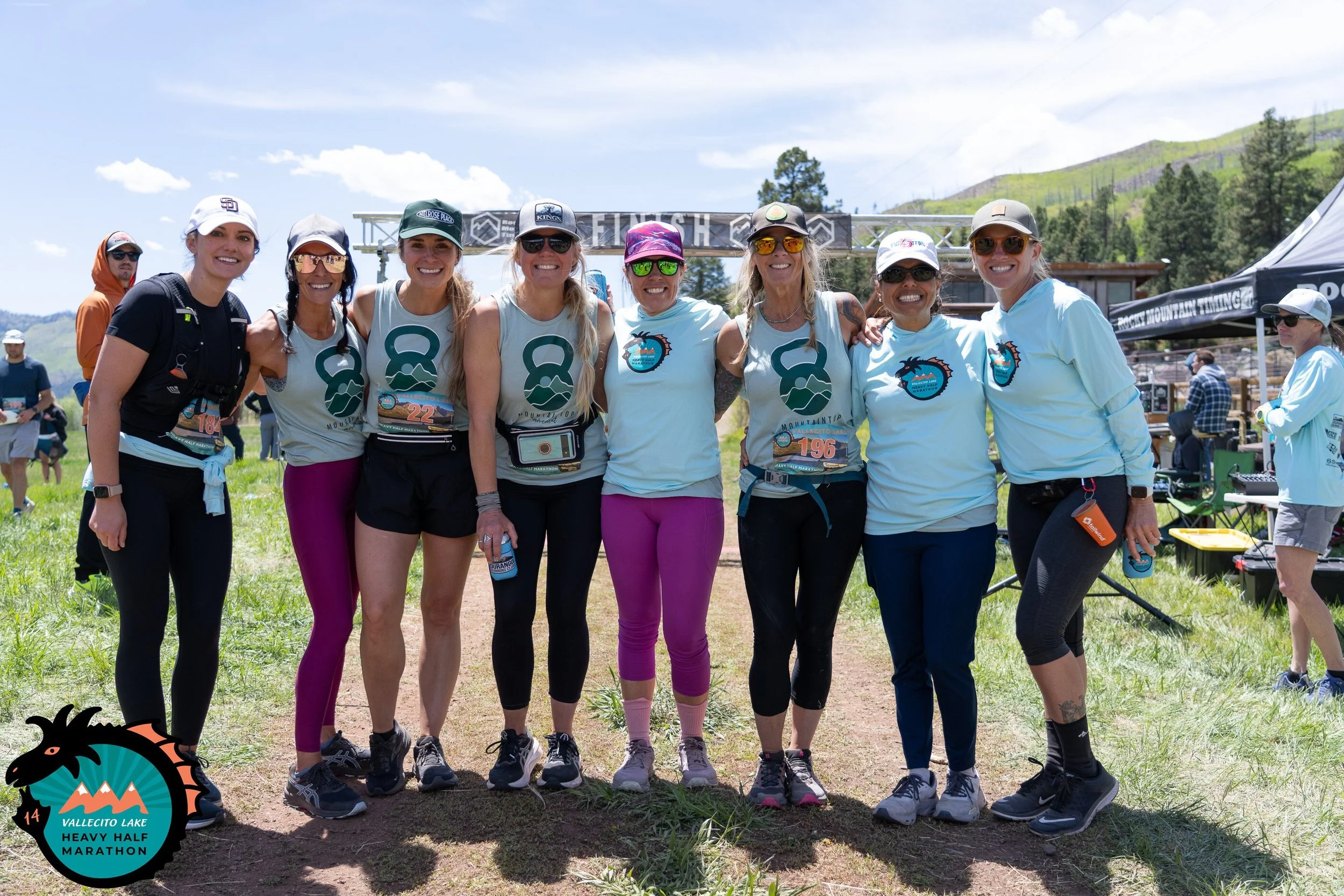
A great group of Vallecito Heavy Half Marathon Finishers - Photo credit Jeremy Wade Shockley
Language and Identity of Inclusion
One thing that always makes me cringe when I hear it is when people call themselves “ultra runners”, or talk about the “ultra running community”. Why? Because it arbitrarily divides the running community into those that have run longer than 26.2 miles and those that haven’t. I get it for those who are literally pro ultra runners, since that is their job description, but I don’t understand why the rest of us would describe ourselves this way. In the past five years I’ve run further than 26.2 miles eight times. I guess I could claim to be an “ultra runner” myself, but over that same period of time, I’ve run less than 26.2 well over a thousand times. In other words, more than 99% of my runs are less than 26.2, and this ratio is pretty much standard for everyone that runs a couple ultras per year. Is it really healthy to define ourselves by what we do less than 1 percent of the times we do something? What if you get hurt during an ultra and have to DNF? Have you lost your identity? What about those in our club that haven’t run more than 26.2 at once? Are they lesser members? Are we not interested in their contributions to the running community?
I will acknowledge that running trails and running roads are different skillsets and different cultures, and it’s tempting to divide ourselves to be either trail runners or road runners. Given that we are lucky enough to live in a place with world-class trails, it’s not surprising that most DRC members prefer trails these days; however, with seasonal wildlife closures starting December 1, to be followed by snow and mud on the trails that don’t close, Durango is not a year-round destination to run trails (in normal years), so I’ve started running mostly on pavement December through March. Even in trail season, I try to run at least once per week on roads so as to not totally lose running form/economy (which you don’t practice if you are just power hiking up and letting gravity do all the work back down). I’m also friends with a lot of great people that only run when on pavement. Nothing wrong with that and I don’t want them excluded from our overall “running community”, which is now how I try to describe the Running Club.
Of course every runner, if they start to take the sport too seriously, will get injured and not be able to run for a while. This is why I would recommend that running or being a runner is not your identity at all. In this regard, I like to think of myself as an “outdoor enthusiast”. For me, that includes running, biking, hiking, cross country skiing and paddle boarding. I’ve had injuries that have prevented me from running, but luckily was still able to hike, bike and paddle. Being satisfied anytime I get outdoor exercise of any type is incredibly helpful with the psychological part of recovery as you don’t lose your identity. Most of our members enjoy multiple outdoor activities, which is why we live in Durango, and we want every nice person in Durango that includes running in their list of outdoor activities to be comfortable joining DRC, not just people that are “serious runners”.
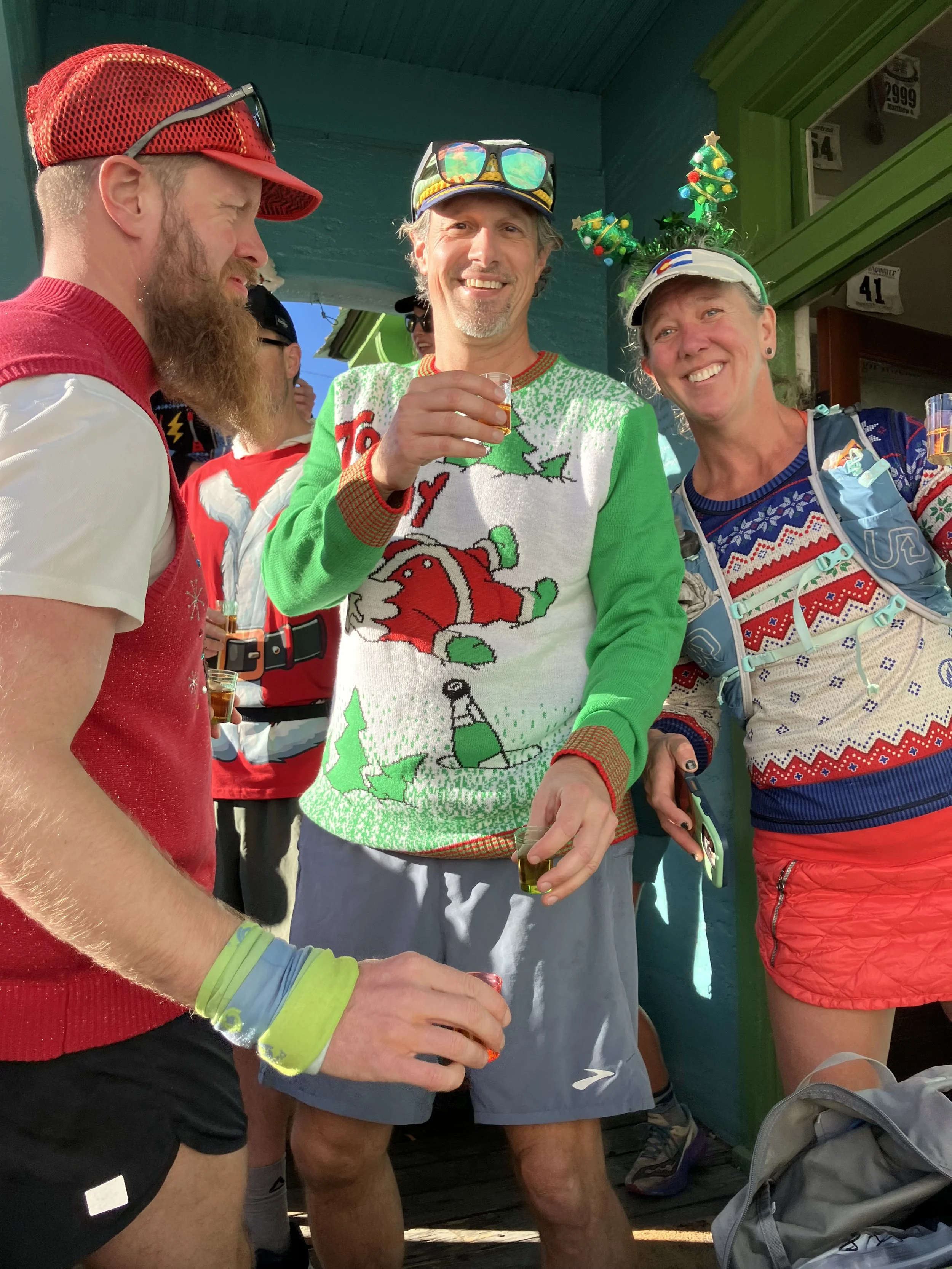
The author and friends at a recent ugly sweater running pub crawl. Lord kill me if I ever become a “serious runner”.
Final Thoughts
The last thing I want to stress is that as long as I’m in charge, DRC will always be welcoming of everyone that wants to join regardless of your age, race, ethnicity, sexual orientation, gender identity, immigration status, disabilities, etc. If anyone feels unwelcome at one of our runs or events for any reason, please let me know about it, but I’m pretty confident that won’t happen. We are a friendly bunch of folks from a lot of different backgrounds, and if you haven’t joined one of our runs yet, I hope you’ll give us a try.