
I know I said the DRC President’s Corner Blog was going on hiatus, but I believe our membership should be aware of threats to one of the crown jewels of the Durango-area running scene, the La Plata Mountains.
A Major Hub of Outdoor Recreation
Although most of the routes in the La Plata Mountains are remants of the mining boom in the late 1800s, after the collapse of the mining industry and the establishment of the San Juan National Forest, land use was converted to promote outdoor recreation. The Forest Service established nine campgrounds along the La Plata River, and as the closest mountain access for regional population centers of Durango and Farmington, these campgrounds are all packed all summer. The Colorado Trail, and associated use by a multitude of hikers, passes through the area at Kennebec Pass at the northern end of the mountains. However, it’s the routes up to the peaks flanking both sides of La Plata Canyon that makes this area so special to the running community.
There are four main routes up the western ridge and three up the eastern ridge, and unlike in neighboring San Juan County, where such alpine routes are covered by side-by-sides, kicking up dust, and often driving at unsafe speeds, La Plata County requires all vehicles on the main road in the canyon to be street legal. With few locations available to park a trailer where the road changes jurisdiction from a county road to a Forest Service road, this means very few of these roads get used by OHVs. Further, the very steep and technical nature of these routes dissuades almost all use by mountain bikes, and most hikers don’t make it more than a mile up from the canyon. And fortunately, although there are many 13,000-foot peaks in the La Platas, none exceed 14,000 feet keeping the hordes of Front-Range weekend warriors at bay. In summary, if you see another human heading up to these ridges and peaks, odds are it’s a local trail runner.
The Importance of the La Platas to DRC
In 1993, DRC created the Kennebec Mountain Run, a 15-mile race with over 3,000 feet of climbing that starts and ends in the ghost town of La Plata City and goes over the 12,000 foot Kennebec Pass. This race is a fundraiser for La Plata County Search and Rescue (LPCSAR), and has raised thousands of dollars every year for that organization. A few years ago, DRC began running up the La Plata Canyon Road from Mayday to La Plata City and back (about six miles roundtrip) as our weekly trail run the Wednesday evening before the race, allowing those that attend this run and the race to cover the entire canyon from south to north in the same week.
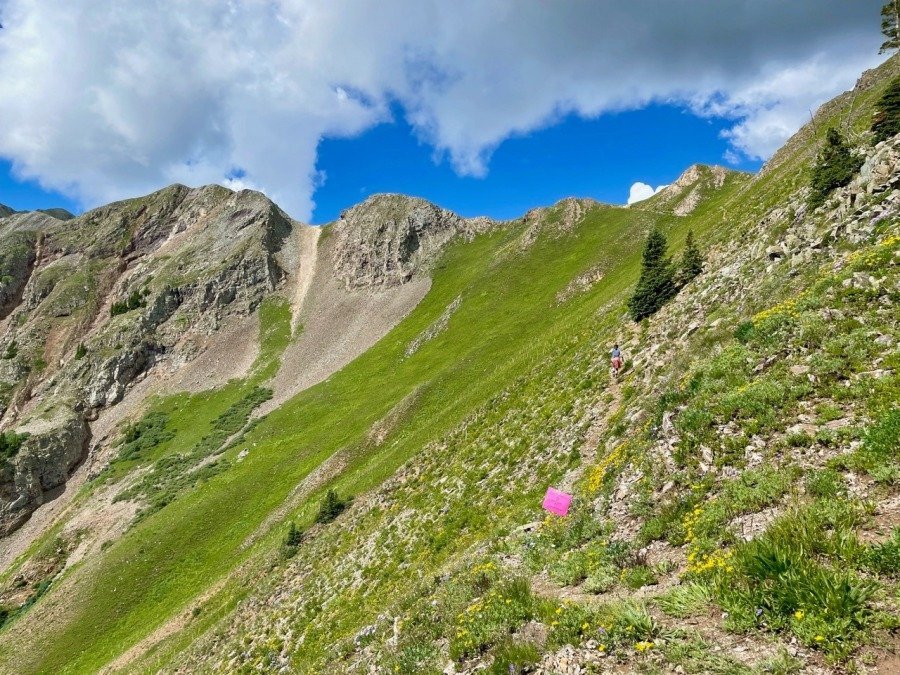
A segment of the spectacular Kennebec Mountain Run course
One of the most memorable DRC weekend long runs was when we took the group up the east ridge to Deadwood and Silver Peaks, which was the first time summiting these peaks for the majority of the attendees. However, it’s the quiet and solitude and convienient access of these mountains that makes them so special to Durango’s trail running community. All of this would be lost with the potential reversion of this spectacular landscape to industrial hardrock mining.
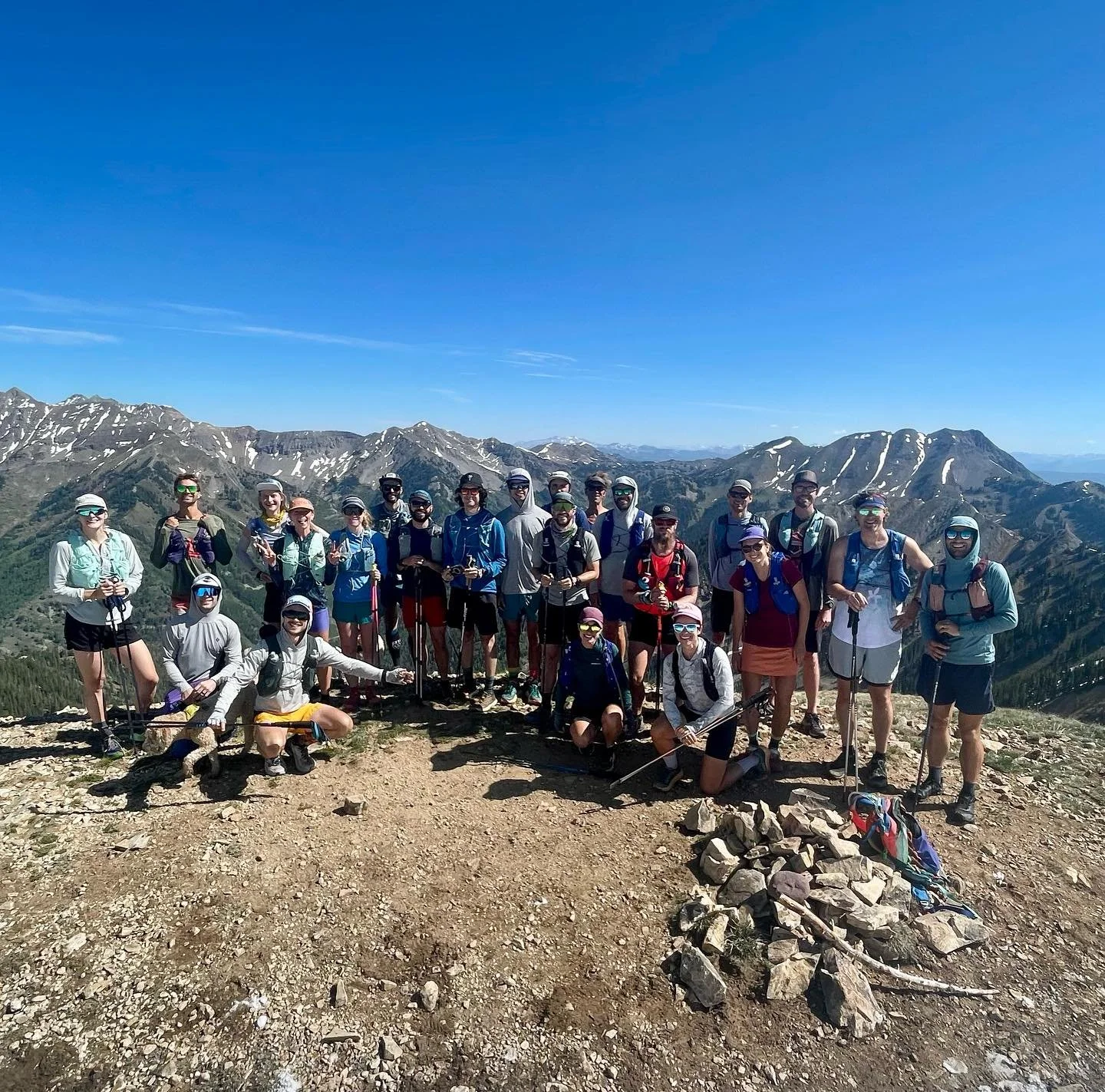
DRC at the summit of Deadwood Mountain
The Proposed Mining in the La Platas
Our previous newsletters have informed our membership of an open house regarding the “La Plata Project”, an exploratory drilling activity by Metallic Minerals, Inc., a Canadian corporation with the intention of demonstrating that the area is viable for full-scale mining extraction. Not surprisingly, little to no details of what an actual mining operation in the La Platas would look like were provided. The refrain was always, “we don’t know yet” or “it’s too early to say” (I’m paraphrasing). Which begs the question, given they have no actual information to provide, what is the point of these open houses?
Understanding Metallic MInerals Intentions
First it is important to understand that Metallic Minerals is an exploration company, not a mining company. They have purchased mining claims near Gibbs Peak and are drilling in those claims to determine what precious metals may be present under those claims and (likely) the adjacent federal land. Metallic Minerals, like all publicly traded corporations, has two goals: to maximize its profits and to maximize the value of its stock holder’s shares. With regards to the La Plata Project, there is only one way they succeed in meeting their goals and that is to maximize the return on investment associated with the purchase of the claims and its drilling activity through demonstrating that the area would be profitable to mine, and then selling their claims to a mining extraction company. All of its actions must be viewed through that lens.
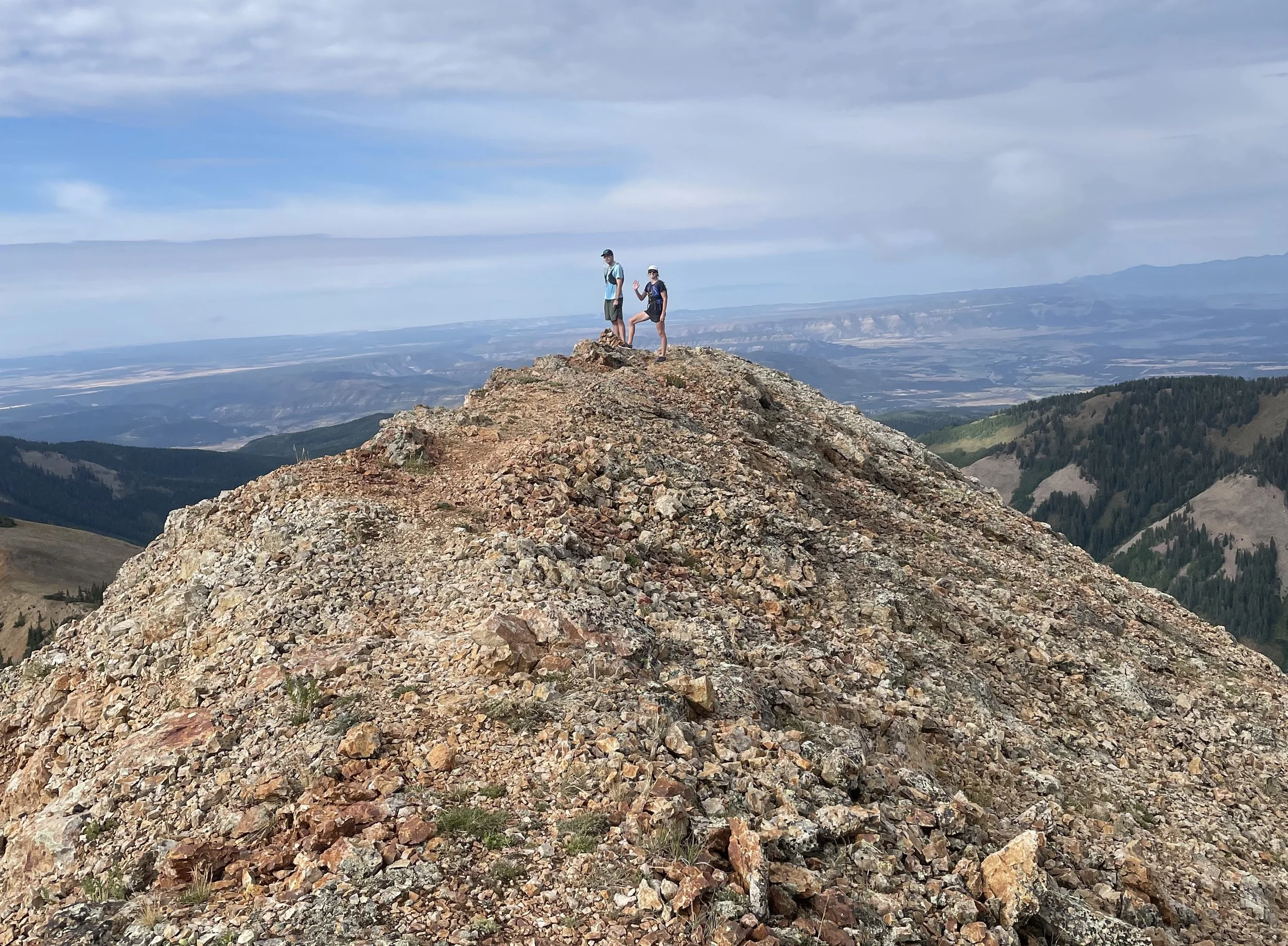
DRC Members Matt Smith and Kim Perdue on the summit of Gibbs Peak. The route up Gibbs Peak, one of the most popular in the trail running community is in the area most at risk given that a portion of it has been sharing the same route Metallic Minerals has been using to its mining claim location.
Understanding “Public Involvement”
Just like all of their activies, putting on these open houses is part of how Metallic Minerals demonstrates the area is profitable for mining, by telling potential buyers that they have done a large amount of public outreach. This means that there is less outreach that the actual mining company will have to do themselves. Metallic Minerals are not paying staff and consultant time solely for the purpose of being good neighbors. The eventual National Environmental Policy Act (NEPA) process that would be required for the Forest Service to issue a permit to the actual mining company requires significant public involvement, but some of it is more meaningful than others. These open houses, which are not being put on by the Forest Service, mean absolutely nothing other than that to state they happened in the public involvement portion of an eventual Environmental Impact Statement that would be drafted by the actual mining company’s consultant. In other words, this meeting was a checkbox. Nothing that was said to Metallic Minerals by anyone that attended the open house will be part of an official record or change their approach in any way, shape or form.
Because these open houses seem “official”, opponents of mining will assume that by attending and voicing opposition they have done their part. Other opponents to the potential mining, after hearing non-answer after non-answer to legitimate questions about how this would drastically change the landscape and outdoor recreation uses, likely left this meeting feeling very defeated and unheard. This is the point of an open house like this. It makes these opponents to the project less likely to engage in the future when it actually counts. Unfortunately, the well-meaning citizens opposed to mining in the La Platas that attended the open house, including many DRC members, were just pawns in this process.
What We Can Do
Since participating in these open houses does nothing but advance Metallic MInerals’ interests, it would be more productive to peacefully protest any future open houses that may occur than to sit and listen to more non-answers. Knowing that a large number of locals will protest everything they do would be a huge deterrent to a potential buyer. This is why Metallic Minerals is rolling out Fort Lewis graduates that supposedly care about these mountains to give the presentations. This is why they are providing so much lip service to the Tribes that have an important connection to the mountains. They want us to think this will be done carefully to soothe pre-sale opposition. Just know that when it actually happens, Metallic Minerals will have cashed a huge check, will be long gone, and nothing they’ve said will matter to the mining company that takes over.
Most importantly, if Metallic Minerals is successful in flipping their claims, be sure to stay engaged in public involvement processes that do matter later down the road. As stated earlier, any large-scale mining operation in the area would require a permit from the San Juan National Forest, an action subject to NEPA. This will require the Forest Service to open a public comment period: comments that must be considered and addressed in the Federal Register, the official publication of the federal government that notifies the public of government actions.
Additionally, the main road up La Plata Canyon is a La Plata County road: a road that would not be able to support large-scale usage by mining equipment and hauling trucks. Given the topography of the canyon, it would be impossible to construct another way in or out of the mountains (at least on the La Plata County side), meaning that use would require a permit from the County as well. Lastly, mining activity would require a permit from the Colorado Division of Reclamation, Mining and Safety as well, which also requires a public notice process. With all of the various ways to oppose the project a lot for the average citizen to keep up with on their own, my recommendation would be to follow the lead of our friends at the San Juan Citizens Alliance and the recently formed La Plata Mountains & Public Lands Coalition, which was formed to oppose mining in the La Platas, and will be speaking at this Wednesday’s run.
The Political Elephant in the Room
Metallic Minerals has been operating in the La Plata Mountains since 2020. Why all of a sudden is this moving so fast? As stated earlier, a large-scale mining operation will require a federal permit, and Metallic Minerals knows that the current Republican administration would be much more likely to fast-track that permit than the previous Democratic administration, meaning a mining company is much more likely to purchase their claims now than before Trump entered office. I’ve gone over this before in Entry #5 when Republicans were proposing to sell off public lands, but if trail running on public lands is as important to you as it is to me, then there is only one logical way to vote in national elections.